VIDEOGRAPHY
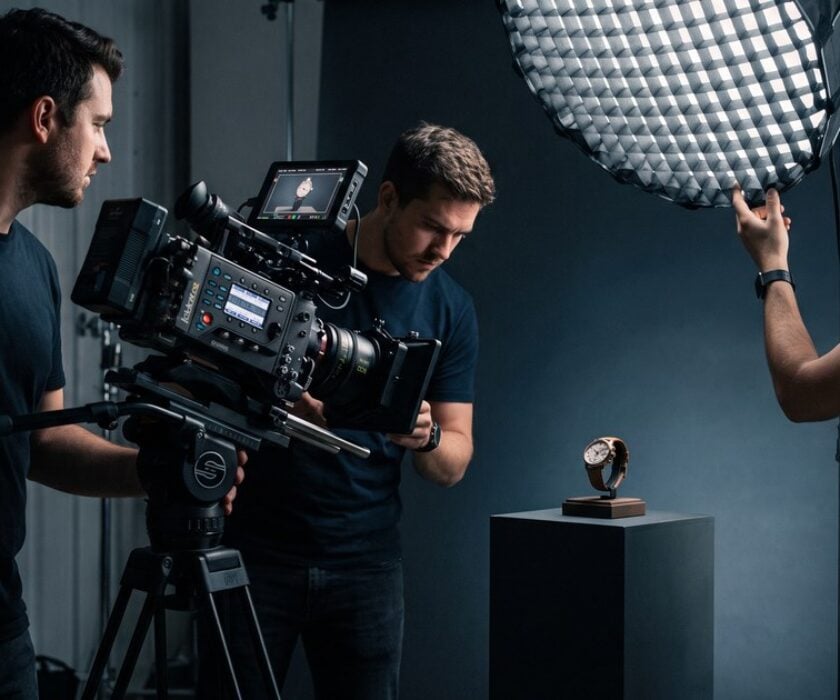
Florida manufacturers use video to show buyers what a spec sheet cannot: the line running, the tolerances held, and the people who stand behind the work. For a state that ships product across the country and overseas, video is often the closest a prospect gets to your plant floor before they commit. The manufacturers who win with it treat video as sales evidence, not decoration, and they build it around the questions a buyer actually asks.
Key takeaways
- Most B2B buyers now watch video during the purchase, and half use it to evaluate a supplier before they ever call. Video shortens the distance between a Florida plant and an out-of-state buyer.
- The video that moves manufacturing deals is capability and product video, not a brand film. Show the process, the quality regime, and the proof.
- Florida’s biggest manufacturing sectors each have a different thing to prove on camera: process control for aerospace and medical, cleanliness and throughput for food and beverage, craftsmanship for recreational boats.
- Plan one shoot around a buyer’s real questions, then reuse the footage across your site, sales email, trade shows, and AI answer engines.
Florida manufacturing is large, growing, and selling well beyond the state line
Video matters more for Florida manufacturers because so many of your buyers never set foot in the building. Manufacturing contributed $86.6 billion to Florida’s economy in the third quarter of 2025, about 4.62% of state GDP, and the sector employs more than 434,000 people (Florida TaxWatch, 2025). Florida ranks third in the nation for the number of manufacturing establishments, with nearly 25,000 firms, and sixth among states for export value (FloridaMakes; Florida TaxWatch, 2025).
Two facts follow from that. Your competition is dense and growing, with more than 2,700 new manufacturing establishments added statewide between 2022 and 2024 (Florida Department of Commerce, 2025). And your buyers are often national or overseas accounts who decide on what they can see and verify at a distance. Video is how a Florida shop gives a buyer in another state a real look at the line, the certifications, and the finish before a purchase order.
Florida manufacturing at a glance
A large base of buyers who buy on evidence
Why capability video pays off in this state
$86.6B
Manufacturing GDP, Q3 2025
434,000+
Manufacturing workers in Florida, 2025
~25,000
Manufacturing firms, 3rd most in the U.S.
6th
National rank for export value
Source: Florida TaxWatch, 2025; FloridaMakes.
The video that wins work is capability and product video, not a brand film
The video that actually moves a manufacturing deal shows how the product is made and proves it holds up, rather than selling a mood. Buyers have already told us this. Seventy percent of B2B buyers watch video during their purchasing journey (Google, 2025), 96% say video is important when deciding whether to advance with a supplier (Brightcove, 2024), and half use video specifically to evaluate a purchase (Demand Gen Report, 2024).
For a manufacturer, four kinds of video carry that weight:
- The capability tour. A walk of the plant floor that shows machines, capacity, and the people running them. This answers “can they actually build what we need, at our volume.”
- The product demo. The part or assembly in use, close enough to see the tolerances, the materials, and the finish.
- The process and quality film. How you hold spec, how you inspect, and how you document it. This is the video that survives a buyer’s due diligence.
- Customer proof. A buyer describing the problem you solved, in their words, on their site.
None of this replaces your sales team or your craft. It amplifies both. A short capability film sent before a call means the buyer arrives already convinced you can do the work, so the conversation is about terms, not whether you are credible.
Match the video to Florida’s biggest manufacturing sectors
What you put on camera should change with what you make, because each of Florida’s leading sectors has a different thing to prove. Florida’s manufacturing base is anchored by aerospace, defense, and space, with medical devices, pharmaceuticals, food and beverage, and recreational boats close behind (Florida TaxWatch, 2025). Here is where video earns its keep in each:
- Aerospace and defense. Buyers audit for controlled process and traceability. Video that shows a clean, orderly floor, documented inspection, and certification in practice does the reassurance a line item on a capability statement cannot.
- Medical devices and pharmaceuticals. Show the cleanroom, the validation discipline, and the regulatory rigor. A prospect evaluating a contract manufacturer wants to see the environment, not read about it.
- Food and beverage. Sanitation, throughput, and packaging lines. Retail and distributor buyers are checking that you can scale a run and keep it clean, and footage settles that fast.
- Recreational boats and marine. This is a craftsmanship story. Lay-up, joinery, materials, and finish are what justify a premium, and they are far more convincing in motion than in a brochure photograph.
Plan one shoot around the buyer’s questions, then reuse it everywhere
The efficient way to commission video is to write down the questions a serious buyer asks and shoot answers to them, then cut the footage into pieces you use for years. Start with a single production day: a capability overview, one product demo, and three short clips that answer your most common sales questions. From that one shoot you get a homepage film, sales-email clips, a trade-show loop, social posts, and short answers that AI search engines can quote when someone asks about your kind of work.
That reuse is where the return sits. Ninety-one percent of businesses now use video as a marketing tool (Wyzowl, 2026), 52% of B2B marketers say video delivers the highest return of any content format they use (Vidico, 2025), and 83% of video marketers report it has directly increased sales (Wyzowl, 2026). The manufacturers who see those results are not the ones with the biggest budget. They are the ones who planned the footage around what buyers need to see and then put it to work in more than one place.
If you want the full commissioning method, from brief to shot list to the questions worth answering on camera, read our guide on how manufacturers should plan and commission product and capability video, or our broader guide to video production for manufacturers for the national picture beyond Florida. For a look at how a related trade uses the same playbook, see how sign companies use video to win bigger projects.
Frequently asked questions
How do Florida manufacturers use video to win new business?
They use capability tours, product demos, process and quality films, and customer proof to show out-of-state and overseas buyers what they can build and how well they hold spec. Because most Florida manufacturers sell beyond the state, video does the plant visit that a distant buyer cannot make in person.
What kind of video works best for a manufacturer?
Capability and product video, not a brand film. Buyers making a purchase decision want to see the process, the quality regime, and proof from other customers. Half of B2B buyers use video specifically to evaluate a purchase (Demand Gen Report, 2024).
Do manufacturers need video if they sell to other businesses rather than consumers?
Yes. B2B buyers are the heaviest users of video in a purchase. Seventy percent watch video during the buying journey (Google, 2025) and 96% say it matters when deciding whether to advance with a supplier (Brightcove, 2024).
How much does capability and product video cost?
Cost depends on the number of shoot days, how many locations and product lines you cover, and how many finished cuts you need from the footage. We scope each project to the pieces you will actually use, so the sensible first step is a short conversation about what your buyers need to see. Request a quote and we will map it to your sectors and sales process.
See what capability and product video can do for your shop
We help Florida manufacturers turn the plant floor into sales evidence buyers can watch from anywhere.