Ai SoftwareMARKETINGPRINTINGTECHNOLOGY
Latest Innovations in Print Technology You Can't Miss: Ignite Your Packaging Power Now
Print tech is shifting fast. New innovations are transforming packaging. From digital breakthroughs to sustainable methods. They boost print quality and tackle environmental concerns. This article breaks down the top trends. Learn game-changing digital printing techniques, the rise of sustainable packaging, the power of print automation, and the impact of high-resolution print methods. Understand these advances. Stay competitive. Meet rising consumer demand for quality and sustainability.
What Are the Game-Changing Digital Printing Advancements?
Digital printing has unleashed unmatched flexibility and customization. It enables on-demand runs that slash waste and cut inventory costs. Prints come out fast. Quality stays high. Recent advances tighten color accuracy and reveal finer detail. The result: packaging that pops on shelves.
How Does Digital Printing Transform Packaging Customization?
Digital printing unlocks customization once impossible. Swap designs, colors, and text for products or limited editions without heavy costs. Deliver personalized packaging that connects with buyers. Move fast. Respond to trends and shifting preferences instantly. Keep packaging relevant and magnetic.
Which High-Resolution Techniques Boost Print Quality?
High-resolution methods deliver show-stopping visuals. UV printing and advanced inkjet produce sharp, vibrant images. They enable finer detail and a wider color range. That elevates brand messaging and perceived product value. Stand out. Command attention.
These methods also apply to specialized uses. Research even explores Braille printing applications.
UV Ink-Jet Printing for Quality Packaging Braille
This paper examines reproducing Braille using UV ink-jet printing on self-adhesive labels that were previously printed by flexo technology. It evaluates whether Braille can be reproduced, the quality of created Braille dots (cells), the legibility of Braille text, and how many varnish layers are needed for quality reproduction.
Use and analysis of UV varnish printed braille information on commercial packaging products, Đ Vujčić, 2021
How Is Sustainable Packaging Printing Revolutionizing the Industry?
Sustainable packaging printing is rising as consumers demand eco-friendly options. Businesses are adopting practices that cut environmental impact while keeping quality. Sustainable methods use eco-friendly inks and materials to reduce harmful emissions and waste. Embrace these practices to meet regulations and win eco-conscious buyers.
What Eco-Friendly Materials Slash Environmental Impact?
Eco-friendly materials are central to sustainable printing. Recycled paper, biodegradable plastics, and plant-based inks are gaining ground. They lower packaging’s carbon footprint and appeal to sustainability-minded consumers. Use them to trim environmental impact while delivering quality packaging.
How Do Sustainable Certifications Elevate Brand Trust?
Certifications build consumer trust fast. FSC and Cradle to Cradle prove a brand’s environmental commitment. Brands with these credentials can clearly communicate their sustainability efforts. That boosts reputation and fosters loyalty. Recognized certifications make you stand out in a competitive market.
Ongoing research reinforces how crucial certifications are to environmental impact and sustainability in print and packaging.
Environmental Sustainability in Print & Packaging
This study looks at recycling printed materials and packaging and their environmental effects. It highlights the need for reliable scientific and technical data, such as an FSC certificate, to support environmental sustainability.
Sustainability in the print and packaging industry, CEM Aydemir, 2023
Why Must You Embrace Print Automation Solutions Today?
Print automation is essential to boost efficiency and cut costs. Automating print steps streamlines operations, reduces errors, and raises output. Robotic arms and AI-driven software accelerate production and lock in consistent quality. Adopting automation isn’t optional. It’s how you stay competitive in a fast market.
How Does Automation Accelerate Production and Cut Costs?
Automation chops manual time. Automated cutting and finishing speed workflows and shorten lead times. Orders get fulfilled faster. Labor needs drop. Savings grow over time. That frees resources to fuel innovation and growth.
What Smart Printing Technologies Drive Efficiency?
Cloud management and IoT devices reshape printing operations. They enable real-time monitoring and on-the-fly adjustments. Data analytics surface inefficiencies and guide fixes. The payoff: less downtime, higher productivity, and a tech-ready operation poised for growth.
A tech-ready operation deserves a tech-ready storefront. A maker can run the most advanced line in the region and still lose the quote because the website looks a decade behind the equipment. Our guide to web design for manufacturers covers what a modern B2B manufacturing site has to do.
What Are the Latest 3D Printing Technology Trends in Packaging?
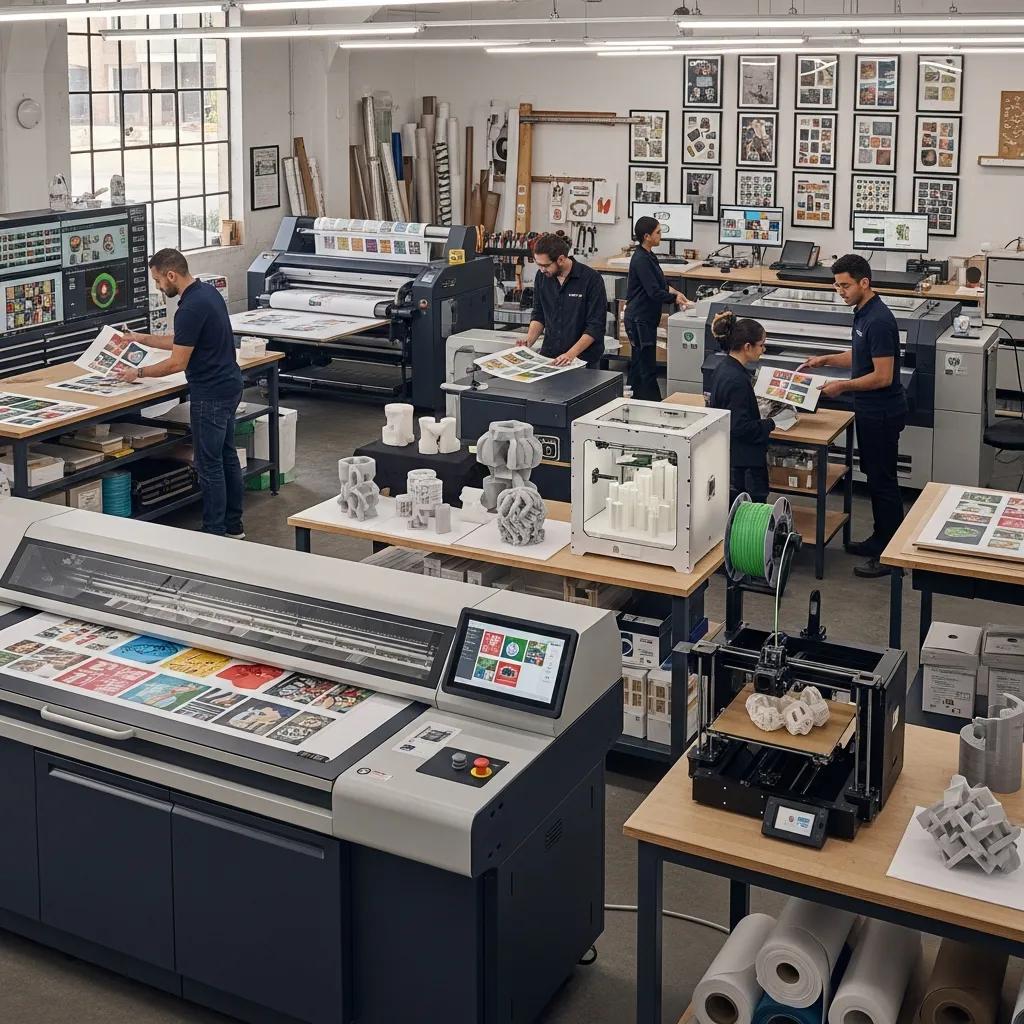
3D printing is shaking up packaging with bold designs and rapid prototyping. It lets teams craft custom solutions tailored to product needs. That improves function and boosts aesthetics. As 3D tech advances, it becomes a must-have for brands that want to stand out.
How Does 3D Printing Enable Innovative Packaging Designs?
3D printing creates unique packaging shapes and structures traditional methods can’t reach. It enables complex geometries and tailored fits. Test new designs and materials quickly. The result: packaging that protects and dazzles. That shifts perception and fuels sales.
Which Industries Benefit Most from 3D Print Integration?
Multiple sectors benefit from 3D print integration. The food and beverage industry uses 3D mainly for prototyping and design, not direct packaging, to refine presentation. Cosmetics leverage it for intricate prototypes and mould designs that attract buyers. As the tech matures, expect wider adoption across industries.
How Do High Resolution Print Techniques Amplify Visual Impact?
High-resolution techniques are key to packaging that grabs attention and conveys brand identity. They amplify visual impact and consumer appeal. Advanced methods help packaging stand out and reflect product quality.
What Methods Deliver Crisp, Vivid Packaging Graphics?
Digital UV and flexographic printing deliver crisp, vivid graphics. These methods produce high-quality images and text vital for strong branding. Sharp detail and vibrant colours make packaging look premium and resonate with consumers. That drives marketing and sales.
How Do Advanced Print Finishing Processes Enhance Appeal?
Embossing, foil stamping, and lamination add premium flair. These finishes elevate tactile and visual appeal. Invest in high-quality finishing to create packaging that protects and entices. The payoff: more consumer interest and higher sales.
Frequently Asked Questions
What are the benefits of using eco-friendly inks in print technology?
Eco-friendly inks come from natural, renewable sources and harm the environment less than traditional inks. They cut VOC emissions, making printing safer for workers and consumers. Using them boosts brand image and attracts eco-aware buyers. Adopt them to support sustainability while keeping print quality high.
How can businesses measure the effectiveness of their print automation solutions?
Measure automation with clear KPIs: production speed, error rates, and cost savings. Track turnaround times and output quality for operational insights. Run regular audits and collect staff feedback to find improvement areas. Use the data to refine automation and maximize productivity while minimising waste.
What role does consumer feedback play in shaping packaging innovations?
Consumer feedback drives packaging innovation. It reveals preferences, expectations, and pain points. Gather and analyse feedback to spot trends and fix flaws. Use those insights to build packaging that’s more appealing, functional, and sustainable. That keeps your brand competitive and relevant.
How does the integration of IoT in print technology enhance operational efficiency?
IoT brings real-time monitoring and data collection to print ops. Devices track machine health, predict maintenance, and optimise workflows. That connectivity enables data-driven decisions, reduces downtime, and boosts productivity. Deploy IoT to streamline operations and react fast to issues, saving costs and improving output quality.
What are the challenges associated with adopting sustainable packaging practices?
Adopting sustainable packaging presents real challenges: higher upfront costs, limited eco-material availability, and production changes. Stakeholders used to old methods may resist. Meeting regulations and consumer expectations can be complex. Still, overcoming these hurdles is essential as demand for sustainable solutions keeps rising.
What future trends can we expect in print technology and packaging?
Expect stronger personalization, deeper automation, and sharper sustainability focus. Digital printing will unlock more customisation options for unique packaging. Automation will streamline production, cut costs, and raise efficiency. Sustainability will drive new materials and processes for greener packaging. Stay adaptable to seize these trends.