VIDEOGRAPHY
How long does video production take? For most businesses, a professional video runs from a few weeks to a few months, measured from the first planning call to the final delivered cut. A short social clip can be turned around in days, while a flagship brand film with several shoot days and custom animation can run a few months. The honest answer is that the timeline follows the scope, and the scope is set by what you need the video to do.
Key Takeaways
- A produced marketing or corporate video typically takes about four to eight weeks end to end; short social pieces can wrap in days and large brand campaigns can run several months.
- The work moves through five stages: discovery, story and script, production, post-production and delivery, and distribution. Each one needs real time.
- The biggest schedule drivers are the number of deliverables, shoot days, travel, animation, and how many people approve each cut.
- Post-production and revision rounds, not the shoot, are where projects most often run long.
- A firm date should follow a scoping conversation, not precede it. Lock the brief and the script early to protect the timeline.
How long does video production take? The honest answer
According to Wyzowl’s 2026 State of Video Marketing survey, reported in HubSpot’s marketing statistics, 91% of businesses use video as a marketing tool and 93% call it an important part of their strategy. With that much riding on the result, the timeline question matters as much as the budget question.
A realistic industry range for a produced marketing or corporate video is roughly four to eight weeks from kickoff to final file. Simpler pieces move faster and ambitious ones take longer, because the work happens in five distinct stages that each need time to do well. What no honest video production agency will do is commit to a firm delivery date before it understands the scope. That is why a good process opens with a discovery conversation rather than a number pulled from a calendar. Once the deliverables, shoot days, and level of finish are clear, a dependable schedule falls into place.
The five stages of video production and where the time goes
Video is rarely a one-off. In Wistia’s 2026 State of Video Report, 76% of companies said they make at least one video a month, which means the production pipeline runs almost continuously for many teams. Knowing where the days actually go is what makes a timeline realistic instead of hopeful. A professional project moves through five stages.
1. Discovery and planning
This is where you agree on the goal, audience, message, deliverables, and budget. Planning also covers casting, locations, scheduling, and permits. Rushing this stage is the most common reason a project stalls later, because unclear goals lead to reshoots and extra revision rounds. Expect anywhere from a few days to a couple of weeks depending on how many stakeholders need to weigh in.
2. Story and script
With the plan set, the team develops the message and writes the script or shot outline. For interview-driven pieces this means preparing questions; for scripted work it means drafts, feedback, and a locked final version. Approving the script before the camera rolls is one of the single best ways to keep the overall schedule short.
3. Production (the shoot)
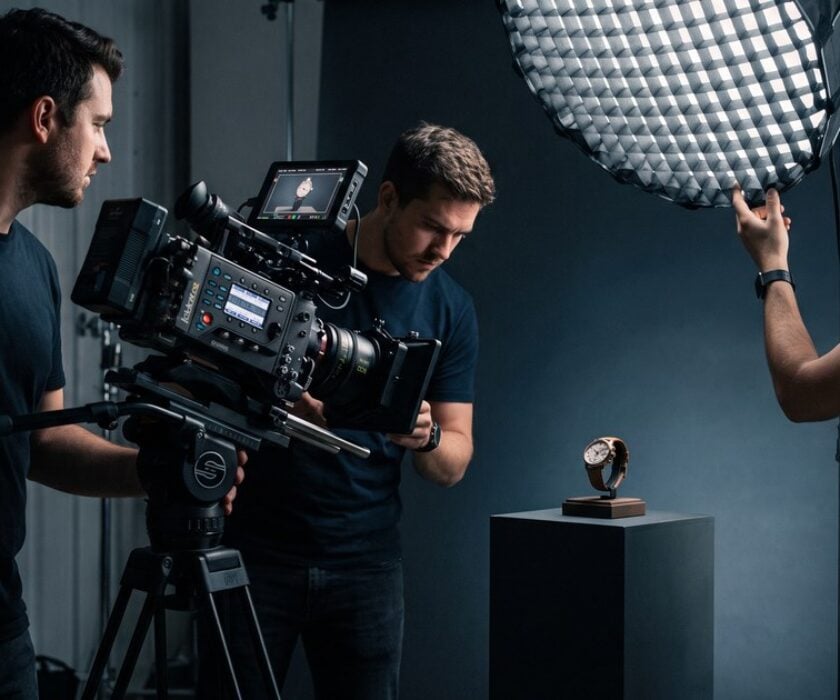
Filming is often the shortest stage on the calendar even though it is the most visible. Many projects shoot in one to three days. Shoot length grows with the number of locations, setups, on-camera talent, and any specialty coverage such as drone or a 360 facility tour. Good pre-production is what keeps the expensive shoot days efficient.
4. Post-production and delivery
Editing is where raw footage becomes a finished story, and it is usually the longest stretch of the project. The U.S. Bureau of Labor Statistics reports about 72,000 film and video editors and camera operators working in 2025, with a median wage near $75,000, a signal of how specialized this craft is. Editors assemble the story, then color grade, mix audio, add graphics and captions, and prepare each cut. Client feedback lives here too, so the number of revision rounds has a direct effect on the delivery date.
5. Distribution
A finished video only earns its keep when people see it. Pew Research Center found in 2025 that 84% of U.S. adults use YouTube, more than any other platform, so distribution planning belongs inside the timeline rather than as an afterthought. That can mean cutting platform-specific versions, adding captions, and getting the video working on your website and in your SEO and content strategy so it keeps working long after launch.
What makes a video project take longer or go faster
Format shapes the schedule. HubSpot’s 2026 marketing data shows short-form video is the top return-on-investment content format for 49% of marketers, and short pieces are usually the quickest to produce. Beyond format, a handful of factors move the timeline more than anything else:
- Number of deliverables. One hero video is faster than a hero plus ten social cutdowns, even from the same shoot.
- Shoot days and travel. More locations and more crew days add production and logistics time.
- Animation and motion graphics. Custom animation is built frame by frame and can add weeks on its own.
- Specialty coverage. Drone footage and 360 tours need extra planning, permits, and edit time.
- Approval layers. Every additional reviewer and every extra revision round extends post-production. Consolidating feedback into one clear list per round is the fastest fix.
- Talent and scheduling. Coordinating executives, customers, or on-camera talent often sets the earliest possible shoot date.
Cost tracks these same variables, which is why a serious quote depends on scope rather than a flat rate. The number of videos, crew and shoot days, travel, and whether you add animation, drone, or a 360 tour all shape both the price and the schedule.
How long different types of video take
Demand for video keeps climbing. The IAB and PwC Internet Advertising Revenue Report put digital video advertising at $62.1 billion for full-year 2024, up 19.2% and roughly 24% of all digital ad spend. Different video types sit at different points on the timeline:
- Social cutdowns and short-form clips: often days to a couple of weeks, especially when they are repurposed from a larger shoot.
- Testimonials and interviews: commonly two to four weeks, depending on scheduling and the number of subjects.
- Product and advertising videos: typically three to six weeks, since they blend scripting, a controlled shoot, and polished editing.
- Brand films and company stories: often six weeks to a few months, because they carry the most planning, production value, and stakeholder review.
- 360 virtual facility tours: timeline depends on the size of the site and how much interactivity is built in.
These are planning ranges, not promises. The right number for your project comes out of scoping the specific deliverables you need.
Planning ranges, not promises
How long each type of video takes
Bars show the upper end of each planning range. Run time matters far less than complexity: a short, heavily animated ad can outlast a ten-minute interview.
How to keep your video timeline on track
Teams are moving faster with new tools. Wistia’s 2026 report found more than a third of video creators already use AI somewhere in their workflow. Even so, the largest time savings come from decisions, not software. A few habits protect almost any schedule:
- Lock the brief in discovery. Agree on goal, audience, and deliverables before anyone writes a word.
- Approve the script before you shoot. Changing the story after filming is the most expensive kind of delay.
- Consolidate feedback. Send one combined set of notes per revision round instead of a trickle of separate requests.
- Plan distribution up front. Decide the platforms, aspect ratios, and captions early so post-production only happens once.
- Book people and places early. Talent and location availability is often the real bottleneck.
When you are ready to put a real timeline against your goals, the fastest path is a short scoping conversation. Our video production team scopes a fixed schedule and price after a discovery call rather than quoting blind. Book a discovery call and we will map the stages to your deadline.
Frequently Asked Questions
How long does video production take on average?
For most businesses, a produced marketing or corporate video takes about four to eight weeks from the first planning call to final delivery. Short social clips can be finished in days, and large brand films can run several months. The range depends on scope, not on a fixed rate.
What takes the longest in video production?
Post-production usually takes the longest, not the shoot. Editing, color, audio mixing, graphics, and especially the number of client revision rounds are where most projects gain or lose time.
How can I speed up my video timeline?
Lock the brief and script before filming, keep the number of reviewers small, and send consolidated feedback in one pass per round. Deciding on distribution formats early also prevents re-editing later.
How far in advance should I plan a video?
Start four to eight weeks ahead for a standard produced video, and give a brand film or multi-video campaign a few months. If your video supports a hard deadline such as an event or launch, begin discovery as early as possible so scheduling talent and locations does not become the bottleneck.
Does a longer video take longer to produce?
Not always. Run time matters less than complexity. A short, heavily animated ad can take longer than a straightforward ten-minute interview, because animation and effects are built frame by frame while a clean interview edits quickly.